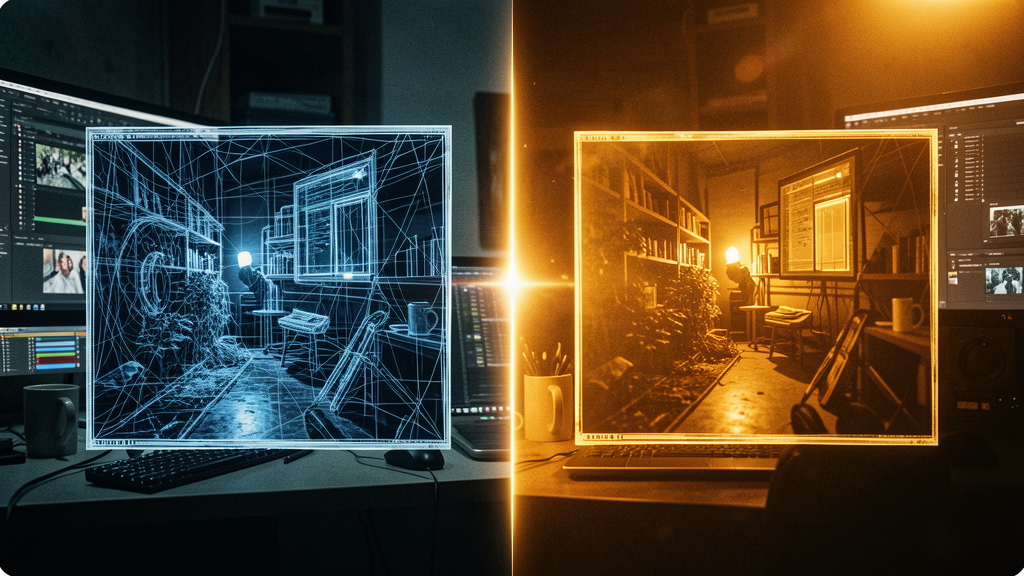
Here's the thing nobody on Twitter tells you about AI filmmaking in 2026: nobody uses one model. The creators actually finishing films run a stack — a fast model to prototype, a workhorse for volume, and a premium model for the shots that have to be perfect.
It's the difference between a $50 experiment and a $5 finished clip. Here's the exact pipeline.
Stage 1 — Prototype Fast and Cheap
Your first pass should not burn premium credits. Use a fast tier like Hailuo 2.3 or Luma Ray Flash — both generate clips in under 30 seconds — or Seedance 2.5's single-pass mode for longer beats. This stage isn't about final quality. It's about locking three things:
- Composition — where's the camera, what's in frame
- Motion — the timing of the action, the reveal, the cut
- Pacing — does the shot hold for 4 seconds or 6?
Run 10 to 20 iterations here. That's the whole point — iteration is nearly free on a fast model, and it's where you find the shot that actually works. Kling's free 66-credit daily tier covers this entirely if you don't need Hailuo's speed.
Stage 2 — Lock the Keeper, Fill the Volume
Once you've found the frame, stop experimenting and start committing. Re-run the winning prompt on your volume model — Kling 3.0 (native 4K/60fps, up to 6 cuts per multi-shot generation) or Seedance 2.5 (30-second single-pass, up to 50 reference inputs for consistent characters).
This is the workhorse stage. It's where your B-roll, your establishing shots, and your dialogue coverage all come from. Seedance's reference stack is the cheat code here — lock your lead character once, and every subsequent shot stays on-model without re-describing them in every prompt.
Stage 3 — Spend Real Money on the Hero Shot
Every film has two or three shots the whole thing lives or dies on. The opening. The reveal. The emotional close. Those are the only shots that deserve Veo or Runway.
Veo 3.1 is the current quality leader with synced native audio built in. Runway Gen-4.5 tops the Artificial Analysis leaderboard at 1,247 Elo and hands you frame-level camera control plus a real edit bay. If you've prototyped properly, you feed one winning prompt into these and get the shot on the first or second take — not the tenth.
Why This Actually Saves You Money
The math is brutal and simple. Ten failed hero-tier generations at premium prices is a triple-digit bill for nothing. Ten fast prototypes at nearly-free is a ten-buck decision you made on purpose. By the time you spend premium credits, you already know the shot works — you're just paying for polish on a proven frame, not gambling on an idea.
Prototype on the fast model. Commit on the workhorse. Blow the budget only on the shots that carry the film.